
Archive Page 2257
January 2026
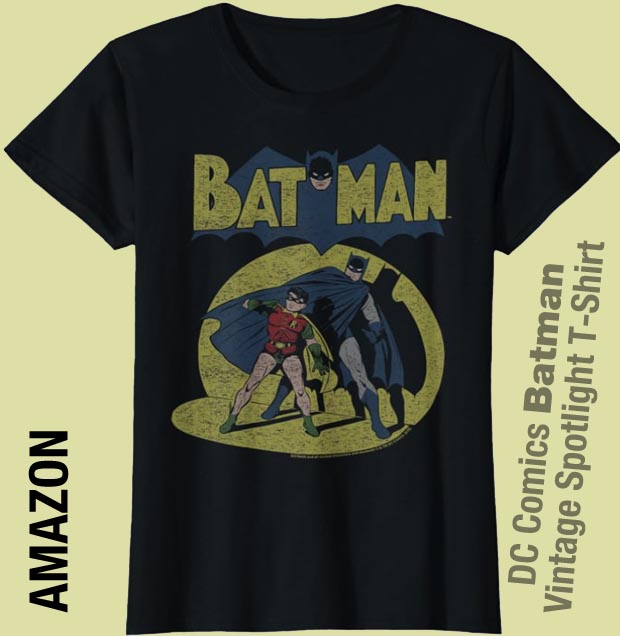
Psychology: want people in public spaces to behave better? Add Batman – Science Alert
A new study has found that people are more likely to act kind towards others when Batman is present – and not for the reasons you might assume. It may sound like a full-throated attempt to score an Ig Nobel Prize, but the study is actually an intriguing exploration of what inspires people towards prosocial behavior..."
Unfortunately the experiment doesn't mention a "control" experiment to reinforce the outcomes they saw with the Batman suit in a public space. For example, other superheroes or, as they surmise, anything unexpected that might break the "zoning" attitude of people on the subway.
Absolute Batman rules holiday sales – MSN Bounding into Comics
Brian Hibbs discusses Diamond's bankruptcy and implosion – Graphic Policy - 41 minute audio
Batman's girlfriend learns his secret identity the funny way – Superherohype
The decline and fall of newspaper comic strips – The Comics Journal
The article picks on Beetle Bailey and makes apologia for Peanuts but is really an overview of how newspaper comic strips reached a zenith of American focus and then waned and slid out of view (mostly).
Newspaper comics’ decline began with size reduction during the second World War. Newsprint was rationed and recycling was encouraged. With few exceptions, former full-page Sunday strips went to half or third pages. Some newspapers, like the St. Louis, Missouri Post-Dispatch, reduced their Sunday comic-strips to fourth, fifth and sixth pages; they chopped and stacked panels and crammed as many features as one page could hold. Daily comics, once published in five or six-column widths, halved that luxurious size as their hold on the public waned. In the first half of the 20th century, comics were a selling point of newspapers. All age groups and social classes read and enjoyed them. The acquisition of Blondie or Dick Tracy in your local paper was ballyhooed. Hefty Sunday papers were wrapped in their color comics section; its arrival made a grand thud on doorsteps. Comics made a difference. Adults read them with glee; kids laid wall-eyed on their living-room floors, pages spread open as they took in the color and imagery..."
I’m old enough to remember the impact of Sunday comic strips in newspapers. As a kid, I lived outside of America part of the time, and the newspaper world still held a great deal of sway “out there”—a power that had already begun evaporating back in the States.
There was a clear difference I could observe once I returned to the U.S. In American homes overseas, I often saw Sunday newspaper pages spread across living-room floors and kitchen tables, with kids and adults luxuriously consuming the whole package, inky page by page.
Television at the time was spotty and only partially filled with American and English-language programming. Radio was mostly in foreign languages, with the exception of Armed Forces Radio, which offered a kind of “mini” digest of American broadcasting with limited daily airtime.
The point of this comparison is that those two mammoth institutions of absorption—TV and radio (the internet did not yet exist)—were truncated competitors to newspapers in these foreign places. This made newspapers (and magazines) far more potent and desirable sources of news and entertainment for a willing and ready audience.
One of the very specific features of newspaper comic strips (in this world outside the USA) that appealed across the entire household—unlike, say, comic books—was that they were considered socially approved entertainment. This was something comic books barely enjoyed, keeping them relegated to a kind of twilight zone of acceptability and disapproval depending on the household. Newspapers, however, did not carry that stigma.
Jem And The Holograms comic book series from IDW Publishing getting collection in the DC "Compact" book size – Bleedingcool
The IDW comic book series series was based on the 1985 – 1988 animated TV cartoon and was made up of 26 issues and 5 specials.
A joint collaboration by Hasbro, Marvel Productions and Sunbow Productions, the same team responsible for G.I. Joe and Transformers, it has become part of the Hasbro line of properties..."
"Burt Ward's’s 13 Grooviest Moments" as Robin the Boy Wonder in the Batman TV Show – 13th Dimension
‘Ultimate Endgame’ blind bags leads to retailer refunds due to damage – MSN Bounding into Comics
Kiran Nadar Museum of Art (KNMA) in south Delhi has large comic and 'zine exhibit that's "hands on" – Moneycontrol
The first section of ‘please touch gently (zines, comics, ephemera)’ is on comic books and graphic novels. Titled ‘We the People, Birds and Beasts, Deities and Demons…, it is curated by Bharath Murthy and tells a story of Indian comics. ‘Chacha Chaudhry’ by Pran to Satyajit Ray’s storyboards for ‘Pather Panchali’ are featured alongside Diamond Comics’ Film Chitrakatha with actual dialogue and still photos from Bollywood movies as well as cartoon strips by masters like Abu Abraham and south films director G. Aravindan. This section alone has works by dozens of practitioners and publications that were the stuff of popular culture in their time — and could easily be seen as the stuff of history and art history today..."
Jim Lee and Bob Layton in Seoul, Korea – Korea Times
Lee reflected on the global reach of comics, noting that while American comics have long enjoyed strong followings in Europe and South America, Asia, and particularly Korea, has only recently seen significant growth. Over the past two to three years, he's seen a big increase in interest, especially among younger readers — many fans in Asia were not yet born when much of his most famous work was first published.... Bob Layton, who was also in attendance. Layton, known for his work on Iron Man, has been a regular at DCC, cultivating the local comic community and using it as an informal training ground. "This is the one place they can buy," said Layton, who was also in attendance, referring to the scarcity of American comic book retail spaces in Korea.
Rea Irvin (1881–1972) and the The Smythes comic strip – The Comics Journal
Rea Irvin was the first art editor at The New Yorker magazine and is responsible for the"look " of the magazine. He created the magazine's monocle-wearing mascot “Eustace Tilley” who appeared on the first New Yorker cover in 1925 and periodically thereafter. Irvin also designed the magazine’s distinctive typeface (called the “Irvin type”). "The Smythes" Sunday comic strip ran from June 15, 1930 to October 25, 1936.


Get into the Public Domain archives that are online at Graphic Chatter
You will see Amazon links on this web site because I am an Amazon affiliate. I earn from qualifying purchases.
Original page February 3, 2026